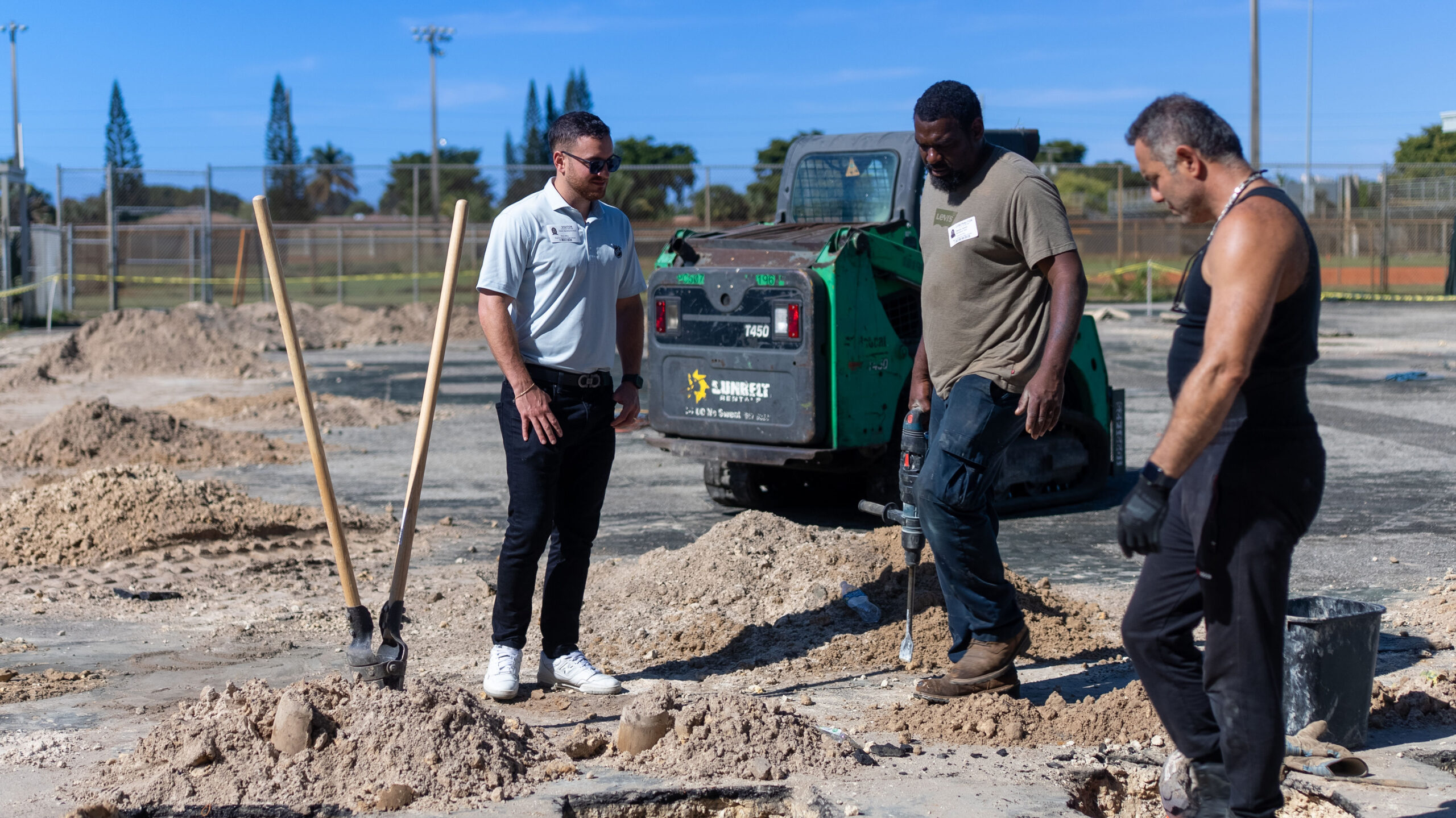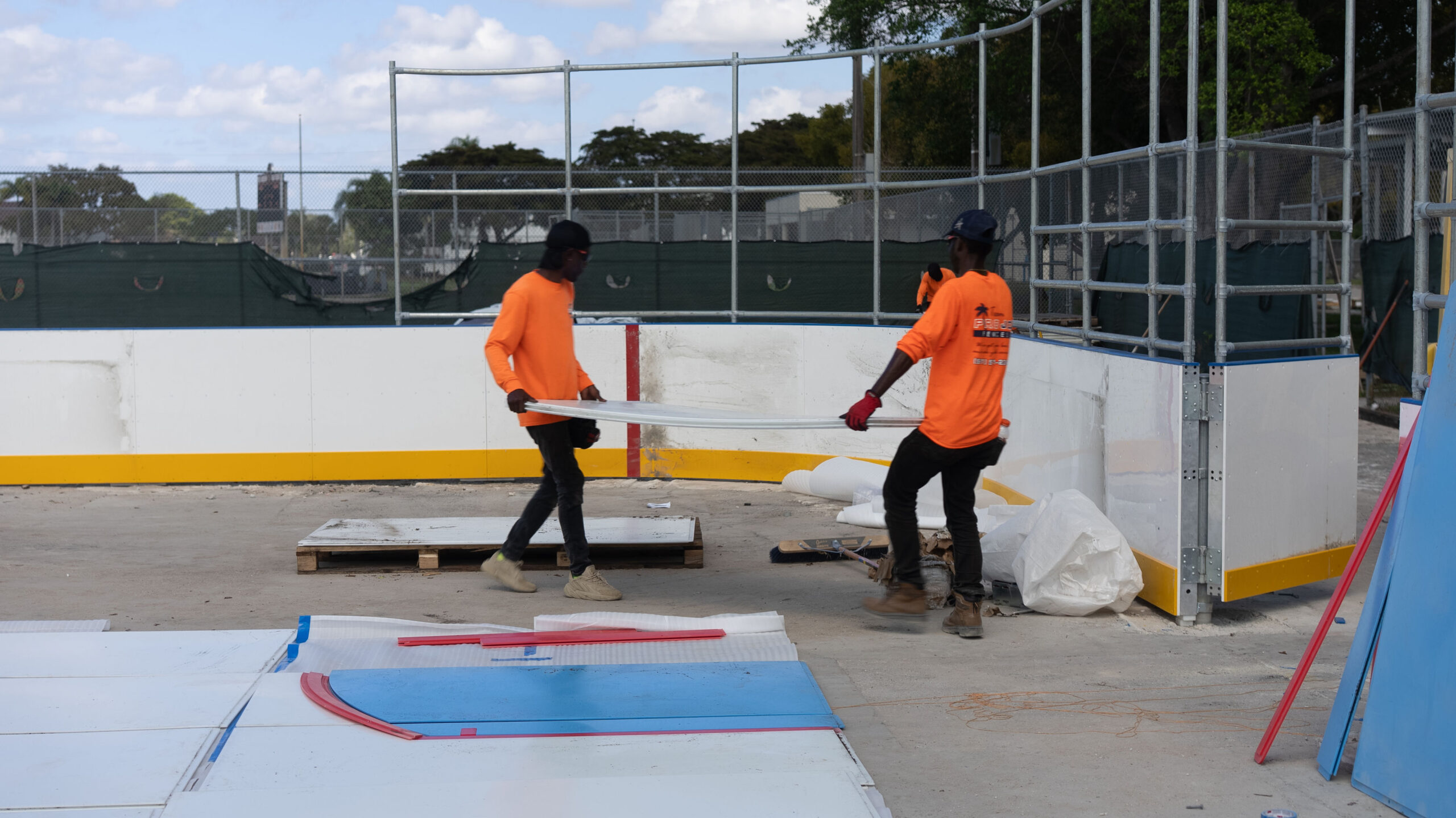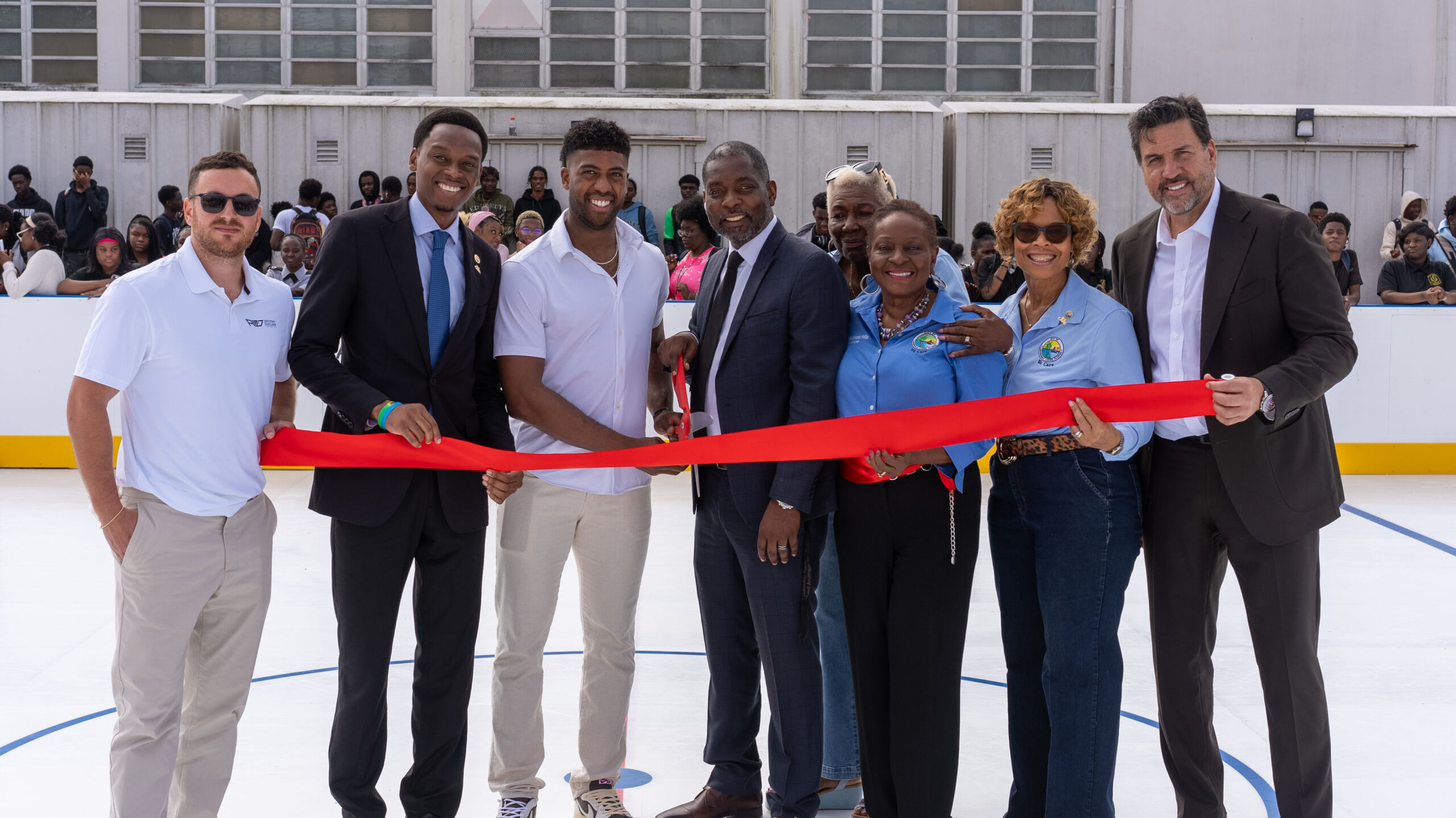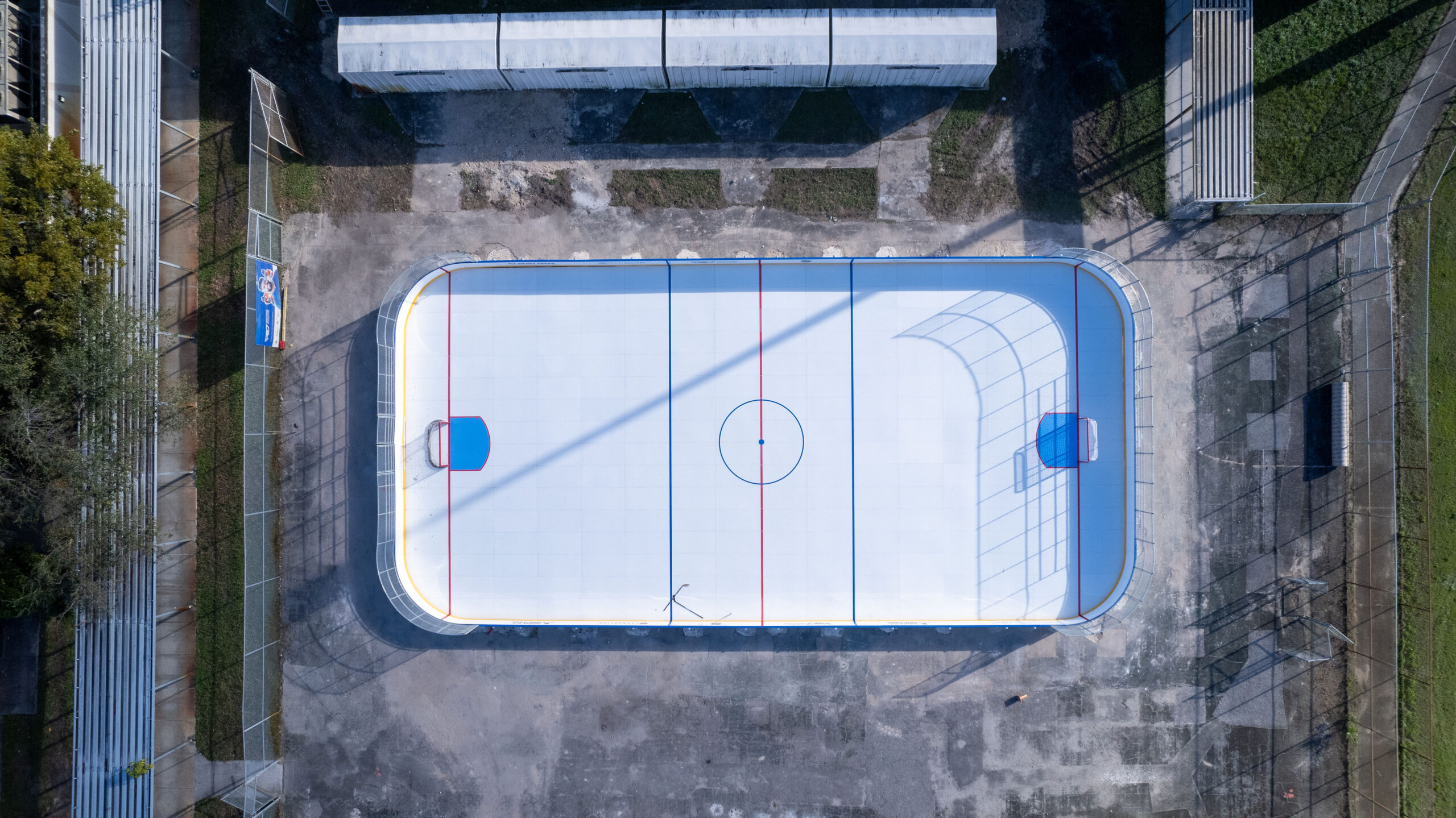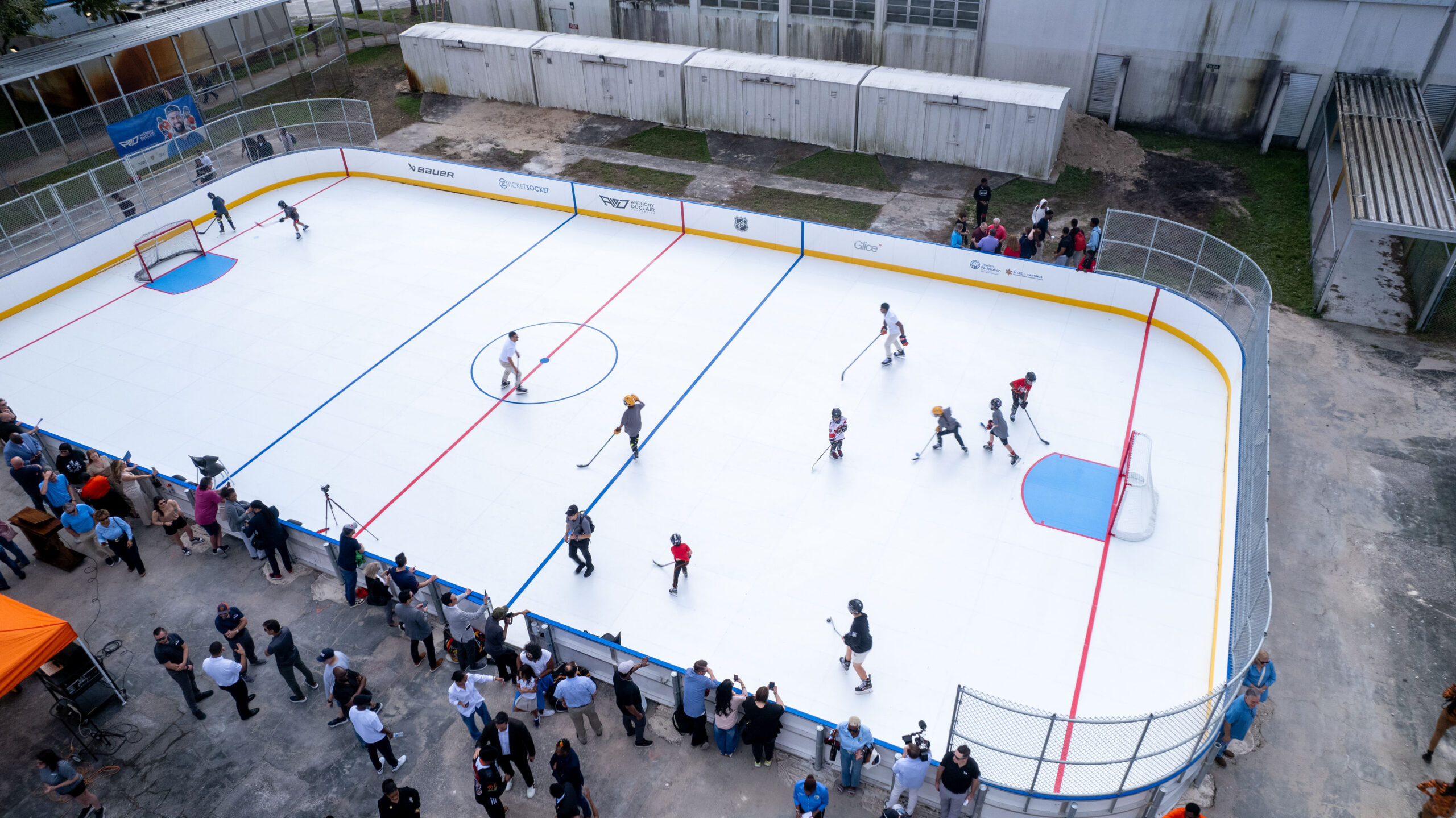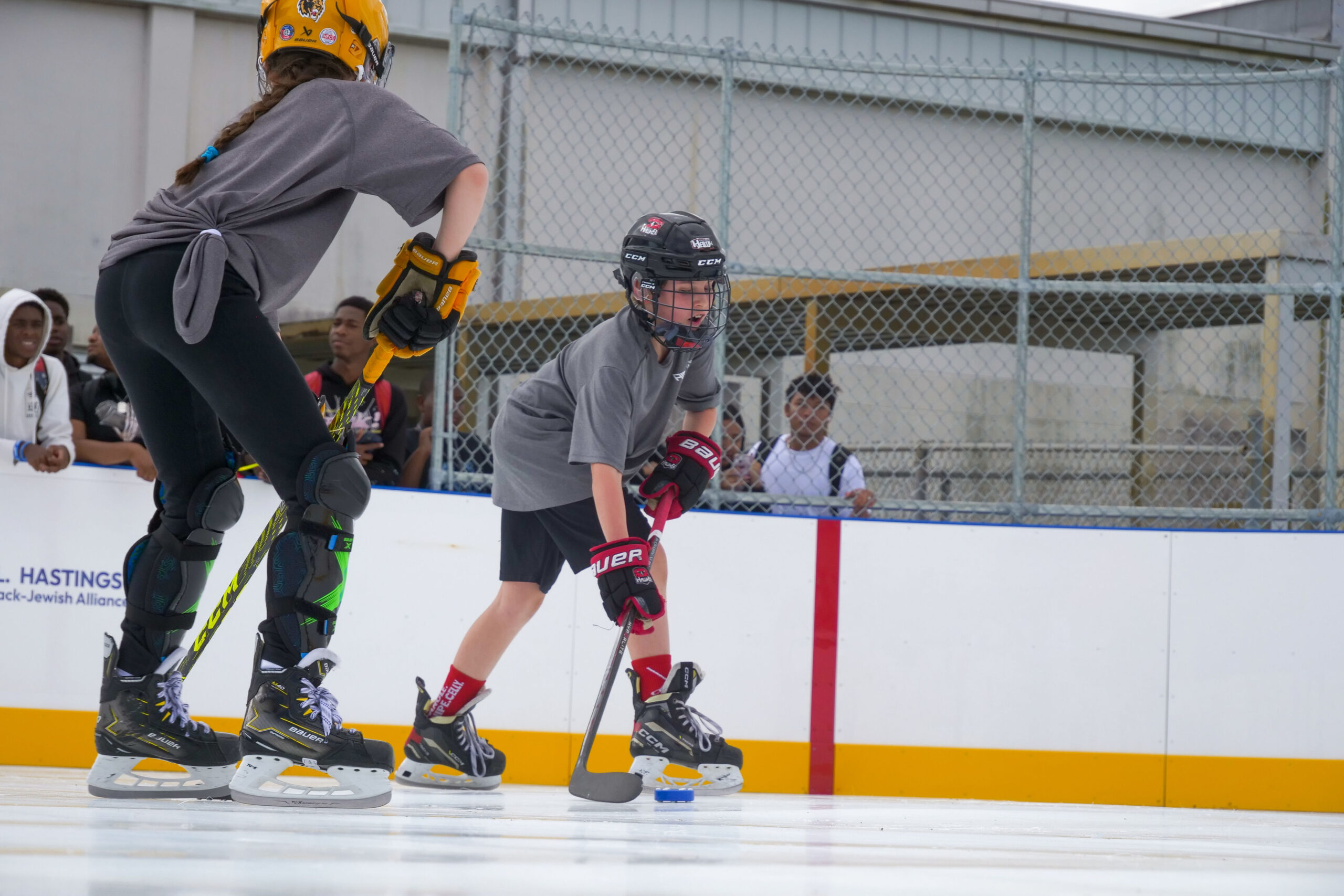
In February 2025 Boyd Anderson High School in Lauderdale Lakes, Florida opened a 100′×50′ synthetic ice rink — the first public synthetic ice rink in the state, and the first time most of the students who use it had ever stepped onto ice.
The project was delivered by Ice Sheets in partnership with the Anthony Duclair Foundation and the NHL/NHLPA Industry Growth Fund, with $50,000 in equipment provided through NHLPA Goals & Dreams.
It cost a fraction of a refrigerated arena, uses no water, no refrigerant and no electricity to run, and it’s open every day of the year in South Florida heat. We took it from concept renderings through permits, construction and ribbon-cutting — a full turnkey build on an outdoor surface.
Today the rink hosts clinics and programs that spark joy and opportunity for students — proof of what’s possible with Ice Sheets, in any climate.
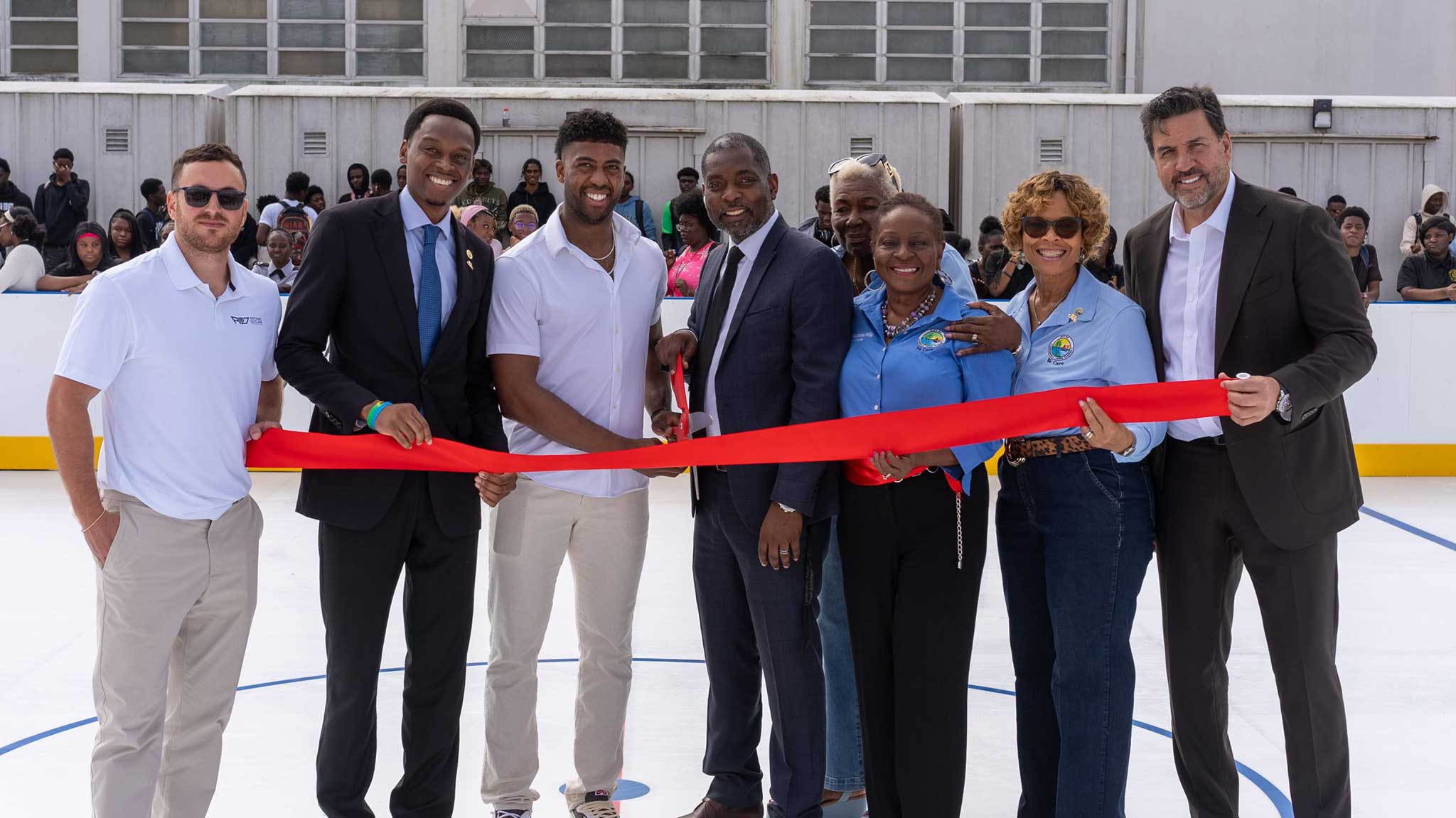
“Without Ice Sheets, none of this would have been possible. From conceptualization to permits and execution, they did it all — and did a fantastic job.”
The problem
For a student at Boyd Anderson, hockey was effectively unavailable. Not unaffordable — unavailable.
Anthony Duclair — an NHL player who grew up in Quebec and has spent his career visible as one of the sport’s few Black players — established the Anthony Duclair Foundation to expand access to hockey for kids who don’t see a path into it.
The NHL/NHLPA Industry Growth Fund — which invested more than $14 million across communities in a recent season and has supported the Anthony Duclair Foundation among other organizations — funded the project alongside the Foundation.
What we did
Most companies in this category sell panels and wish you luck. Here’s the scope we actually carried.
Site assessment and feasibility
Evaluating the location, surface condition and drainage.
Design and specification
A 100′×50′ surface with a hurricane-rated dasher board system engineered for Florida wind loads.
Permitting and approvals
Navigating school board and municipal requirements.
Construction management
Coordinating local contractors through delivery and install.
Equipment sourcing
Panels, boards, nets, skates and maintenance equipment.
Programming design
Building a curriculum the school could actually run.
Coach introductions
Connecting the school with people who could teach the sport.
Staff training and handover
So the school could operate the rink independently.
At the time of this project we sourced synthetic panels from a third-party European manufacturer. We now manufacture our own sinter-pressed VHMW-PE panels, which gives us direct control over specification, thickness options, lead time and cost — and lets us publish our material spec, which most of this industry does not.
The build
Typical delivery timeline for a project like this today: 8–12 weeks for materials manufacture and delivery, then a matter of days for installation. Specific permit and construction requirements for hurricane season required a few months delay in this case.
Why synthetic made sense here
A refrigerated arena starts at $8–10 million and carries continuous energy costs — in a climate where refrigeration works hardest and costs most. See the full comparison →
This rink
Could this work at your school?
If you’re a school, district or municipality looking at something similar, the honest answer is that it depends on your site, your budget and your programming plan — and we can tell you quickly which of those is the real constraint.
Tell us what’s on the ground and we’ll tell you what’s realistic.
Yes. Boyd Anderson High School in Lauderdale Lakes opened its 100′×50′ surface in February 2025 — the first publicly accessible synthetic ice rink in the state.
The Anthony Duclair Foundation and the NHL/NHLPA Industry Growth Fund funded the project, with $50,000 in equipment provided through NHLPA Goals & Dreams. How community rinks get funded →
Polymer panels are unaffected by heat, humidity and rain — performance doesn’t change with ambient temperature. The dasher board system was engineered to Florida hurricane wind loads, and permitting for hurricane season added a few months to the schedule.
Effectively nothing beyond routine cleaning and staff time. There is no refrigeration plant, no water use, no certified operator and no ice resurfacer.
A comparable project today runs 8–12 weeks for materials manufacture and delivery, then a matter of days to install. Hurricane-season permitting extended this build by a few months.
It depends on your site, your budget and your programming plan. Send us photos and dimensions and we’ll tell you quickly which of those is the real constraint. What a rink costs →
Buy a permanent rink, or rent the Ice Breaker™ to test the waters.