
Arenas & Training Facilities
Your prime-time ice is sold out. Your summer is dead. Your learn-to-play program competes with rep teams for the same sheet, and you have nowhere to run dryland.
A synthetic surface solves all three for a fraction of a refrigerated build — installed on your parking lot, your unused pad, or beside your existing building. No chiller, no slab, no water, no certified operator. Open twelve months a year, including the months your ice is out.
We build it, program it, and hand it over running.
Every arena operator we’ve talked to has some version of the same three problems.
01
The 6–9pm weekday block prints money. The rest of the schedule is a discount you negotiate against yourself. Adding hours to a single sheet isn’t possible; adding a sheet costs $8–10 million.
02
Ice comes out, and the building either sits or hosts events that earn a fraction of what hockey does. Fixed costs don’t take the summer off.
03
Learn-to-play, skills sessions and adult beginners are your pipeline — the customers who become season-long users. But they compete for ice against groups who’ll pay more per hour today, so they get the 6am slot or get cut.
A second surface fixes all three at once. The question has always been that it costs millions and needs a second refrigeration plant.
P&L
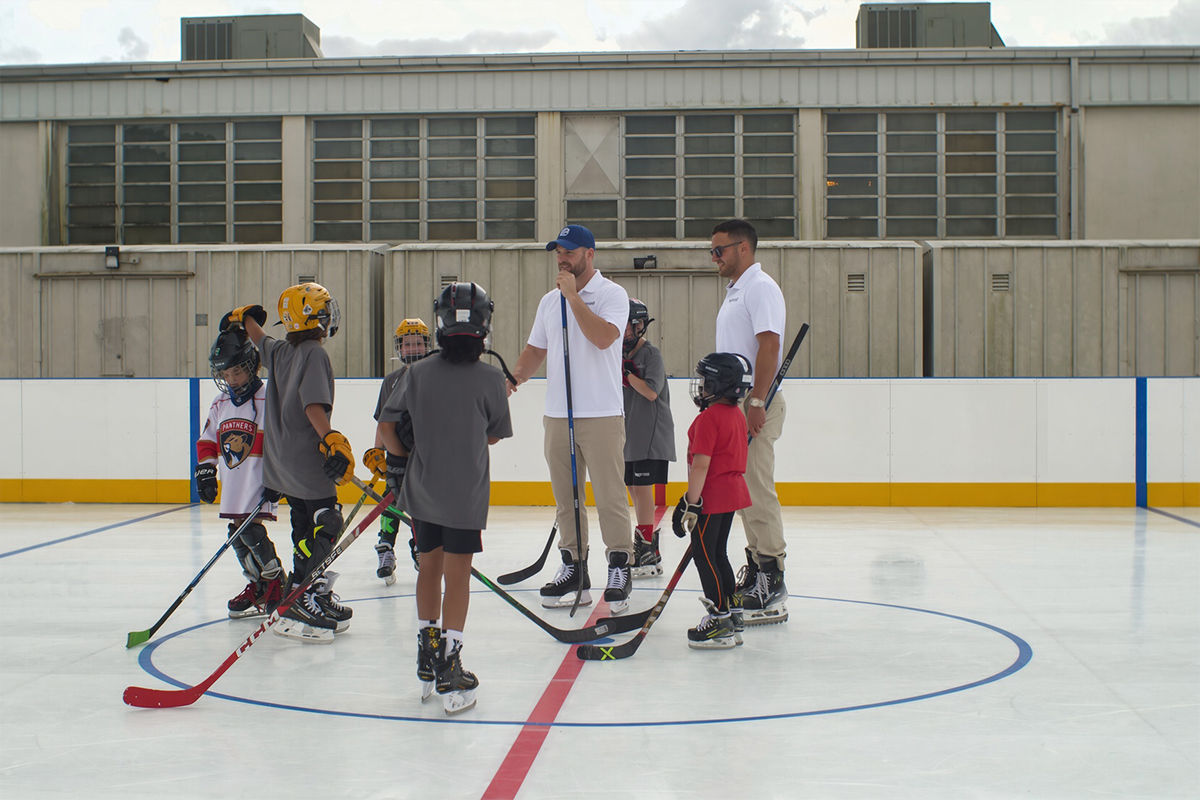
Most often the parking lot.
| Cost | A fraction of a refrigerated build |
|---|---|
| Refrigeration | None. No chiller, no compressors, no mechanical room |
| Slab | Not required. Panels sit on a flat, drained base |
| Water | None |
| Certified operators | Not required |
| Season | Twelve months, any climate |
| Lead time | 8–12 weeks materials, then days to install |
| Lifespan | 10–15 years per face, dual-sided — 20–30 years of service |
Sizes run from a skills pad to a full 100′ × 50′ surface. Most arena installs land in the middle: enough for learn-to-play sessions, small-area games and skills work, without eating the whole lot.
This is the part that matters to your board, so here it is plainly. A second surface creates income your existing sheet cannot.
This is the single biggest one. Your synthetic surface doesn’t care that it’s July. Summer camps, skills academies and drop-in sessions run in the months your building currently earns nothing.
Move it off your main sheet entirely. You free up prime ice for groups who pay more, and beginners get a lower-pressure environment where a slower surface is genuinely an advantage, not a compromise.
Sell blocks of surface time to the private coaches and skills programs already operating out of your facility. They’re currently buying your expensive prime ice for edge work that doesn’t need a full sheet.
Resurfacing, maintenance, tournaments running long, or a chiller failure — the second surface absorbs it instead of you cancelling.
The dasher boards are brandable. An outdoor surface visible from the road is inventory you don’t currently have.
Strength work, shooting reps and skating mechanics — billable independently of ice time. See the hockey gym below.
A surface is a rental. A surface plus a gym is a destination.
It’s what turns a parking-lot install into a year-round revenue line rather than an overflow sheet. We design and build the whole environment alongside the ice.
Strength and conditioning built around hockey rather than adapted from a general gym. Programmed for the movement patterns your athletes actually need, and sized to the space you have.
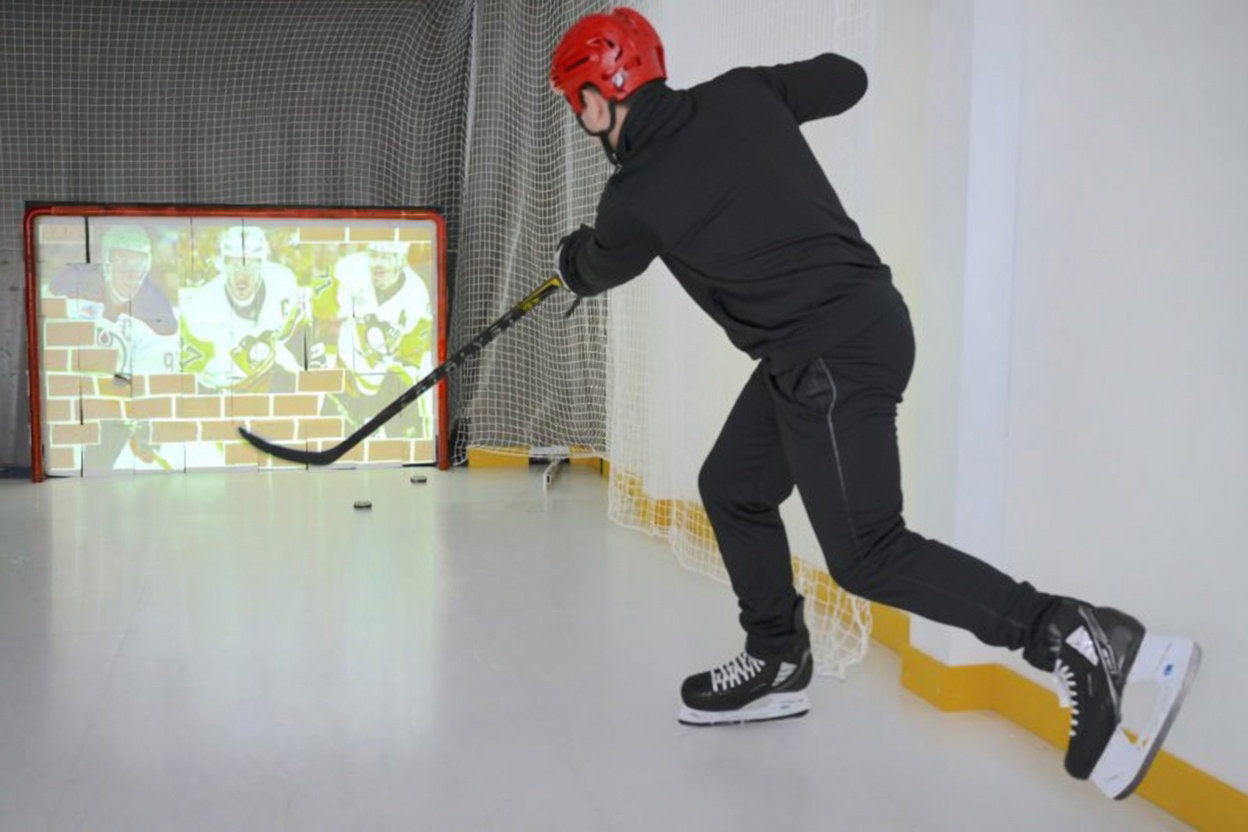
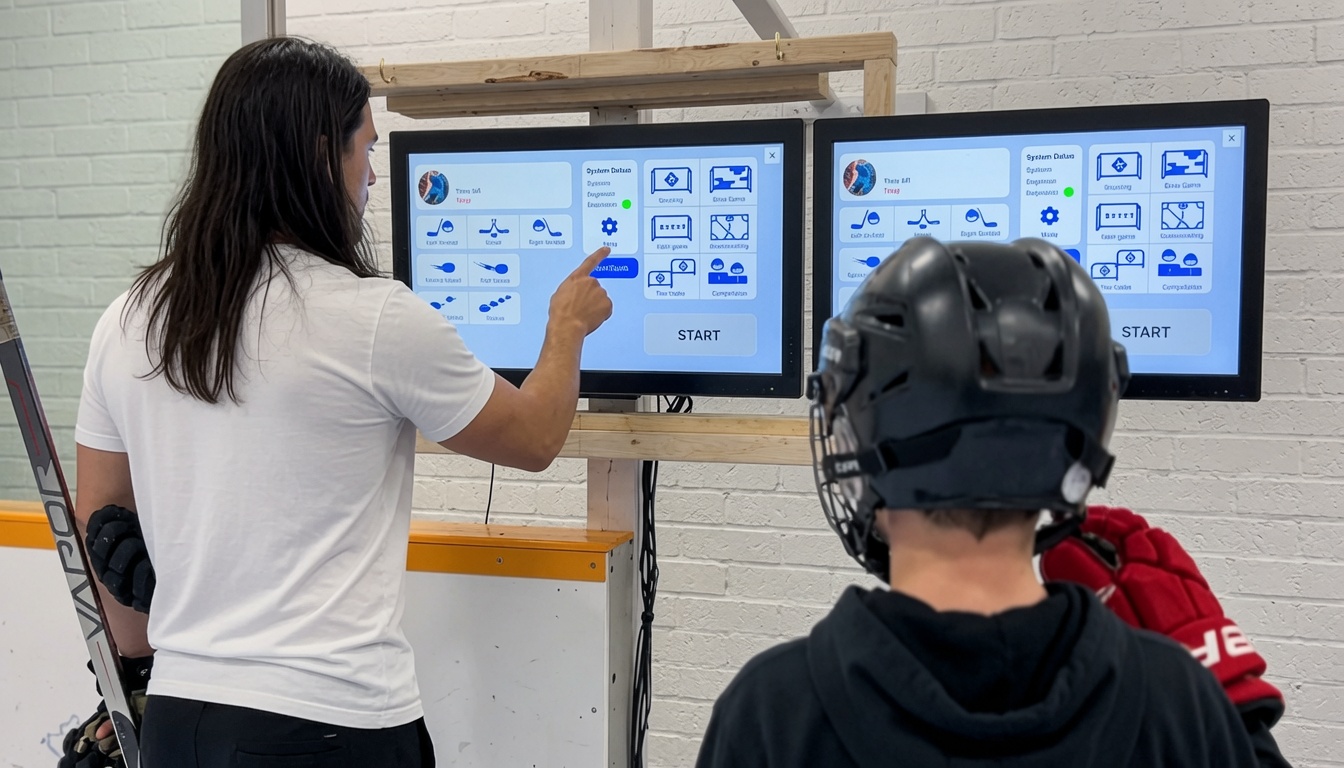
High-tech drill stations with instant feedback and pro-level rep volume. Players get measurable output from a fifteen-minute session, which is what keeps skills programs selling.
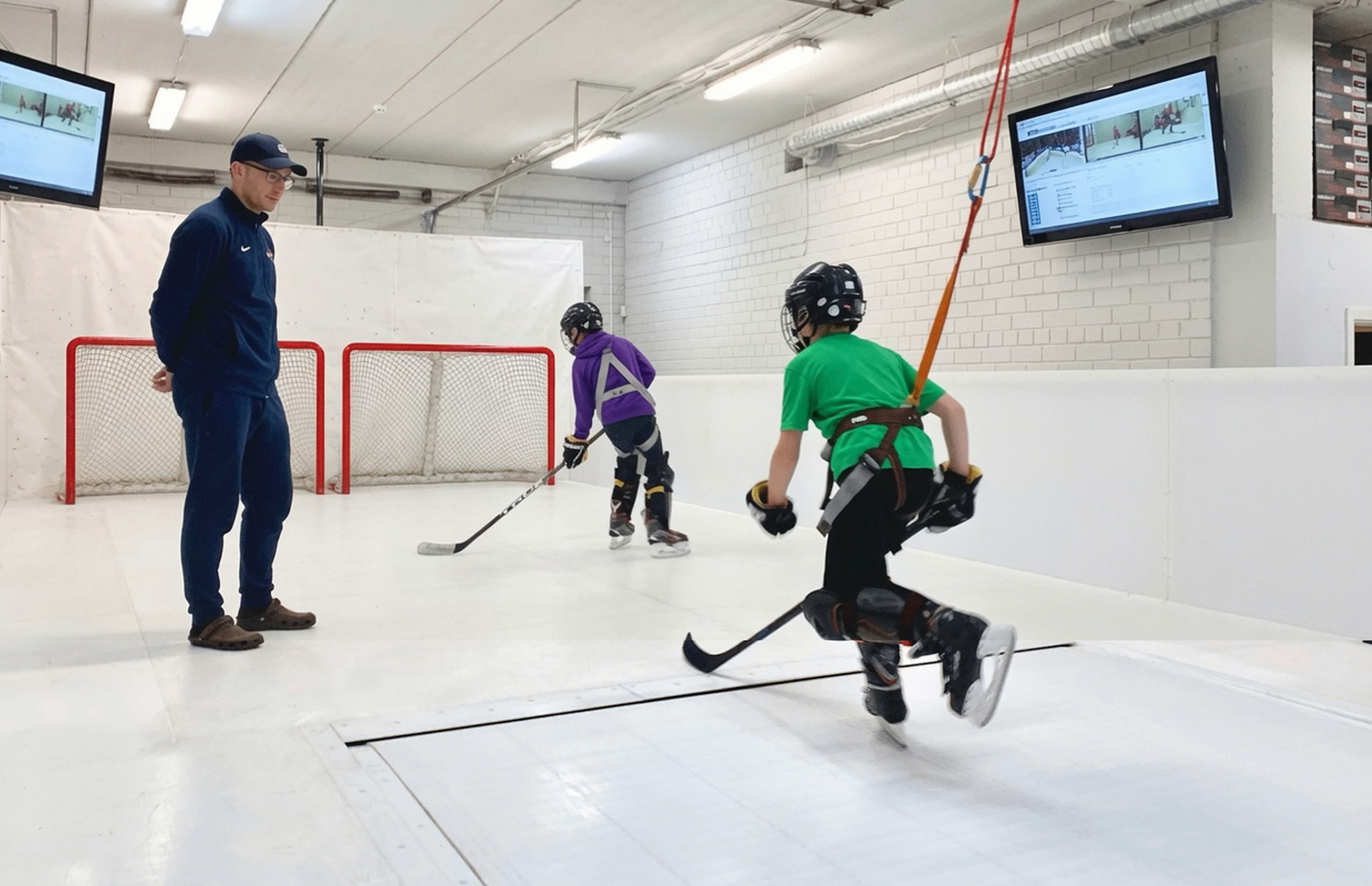
A treadmill built for blades — continuous top-speed skating in a fixed footprint. High-value coaching inventory that runs regardless of what’s happening on the main sheet.
Why this matters commercially: each of these is billable independently of ice time. A player can book a Skatemill session, a simulator block and a strength session without touching your schedule — and the same athlete who came for skills stays for the gym.
| Refrigerated second sheet | Synthetic second surface | |
|---|---|---|
| Capital cost | $8M–$10M+ starting | A fraction of that |
| Refrigeration plant | $250,000–$700,000 | None |
| Slab with embedded piping | Required | Not required |
| Mechanical room / building envelope | Required | Not required |
| Ice resurfacer | $50,000–$145,000+ | Not required |
| Certified operators | Required by regulation | Not required |
| Annual energy for the surface | Typically the largest recurring cost in the building | $0 |
| Water | Continuous | Zero |
| Time to opening | Years | Weeks |
| Operating season | Seasonal, or year-round at cost | Twelve months at no cost |
If your plant is aging, an R-22 system is being phased out, or you’re staring at a $250,000–$700,000 replacement quote, it’s worth modelling a synthetic conversion before you sign.
For some facilities the right answer is still refrigerated — sanctioned competition and figure skating need real ice. For others, particularly a second or underused pad, converting removes the replacement cost, the energy line and the operator requirement permanently.
We’ll model both honestly.
Your members will ask, so here’s the straight answer.
Synthetic ice has always been draggier than a freshly resurfaced sheet — and the reason isn’t the plastic. A steel blade glides on real ice because pressure and friction melt a microscopic film of water beneath it. The blade is sliding on water it creates as it goes. Polymer doesn’t produce that film, so a steel blade ploughs instead of gliding.
For thirty years this industry attacked that from the panel side — denser polymers, better glide agents, tighter seams. It took synthetic ice a long way and then plateaued, because no surface can make a steel blade behave the way it does on water.
We built the other half. CryoBlades™ is the first blade system engineered for polymer from the ground up rather than adapted from steel, developed alongside our panels as a matched system. Launching January 2027.
For a facility, that matters twice: your users get a surface that skates far closer to real ice, and you get a rental and retail line.
Stages 03 through 06 are the ones a panel supplier can’t quote. For a facility already running programs, they’re also the ones that determine whether the second surface earns.
| Stage | What it covers | |
|---|---|---|
| 01 | Consulting & Planning | Site sourcing, project renderings, permit requirements, and a rink design matched to your space, surface and budget |
| 02 | Project Management & Execution | All vendors and suppliers managed from concept to completion — surface, boards, locker-room systems, lighting, nets, covers, banners and decals |
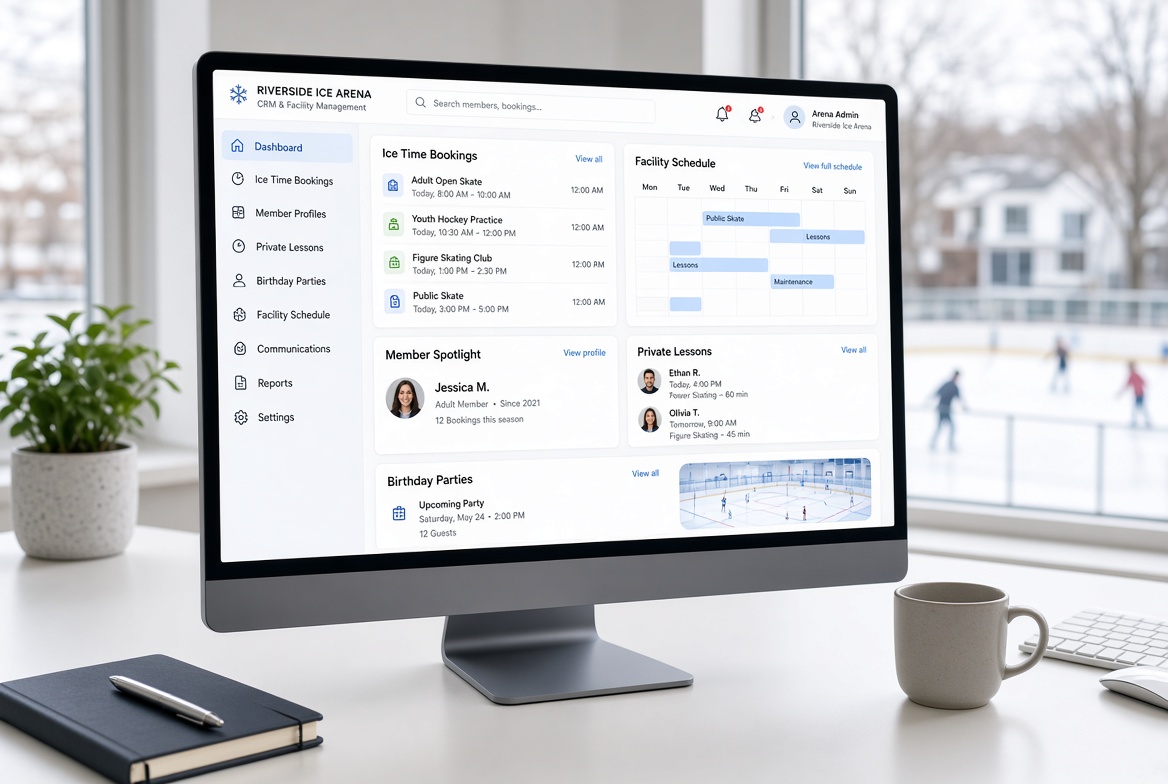
| 03 | Operational Services | CRM and scheduling tools, rink and equipment management, risk and security |
| 04 | Hockey Programming | Hiring territory managers and coaches, building skill-development programs that attract and retain players |
| 05 | Rink Evaluation & Analytics | Customer and player data, demographic analysis, campaigns that drive utilisation |
| 06 | Production Services | Press, media and promotional support for your opening |
We’re not a panel supplier. For a facility build we handle:
Site assessment and feasibility, including a revenue model for your market
Permitting and approvals
The full build — surface, boards, lighting, hockey gym equipment
Booking and scheduling tools
Design and renderings
Construction management
Programming design and coach introductions
Staff training and operational handover
At Boyd Anderson High School we delivered exactly this — permits to ribbon-cutting — in partnership with the NHL, the NHLPA Industry Growth Fund and the Anthony Duclair Foundation. Read the case study →
Usually yes, and that’s the most common install. A paved, level, drained lot is close to an ideal base — it removes the site preparation line entirely.
Yes. Performance is unaffected by temperature, sun or humidity. A weather tarp protects it when it’s not in use.
No specialised staff. Maintenance is vacuuming shavings and a periodic wash — typically absorbed by existing facilities staff. No certified refrigeration operator, no resurfacer driver.
Coverage depends on your operator and use. Practically, you’re removing a pressurised refrigeration system rather than adding one. Confirm specifics with your broker.
Yes for small-area games, learn-to-play, skills and recreational play. For sanctioned competition, real ice remains the standard.
Labour plus occasional parts. No electricity, no water, no refrigerant, no resurfacer.
8–12 weeks for materials, then days to install.
Tell us your site, your current schedule and where your revenue gaps are. We’ll come back with a build, a cost and a realistic revenue model.