
Backyard Rinks
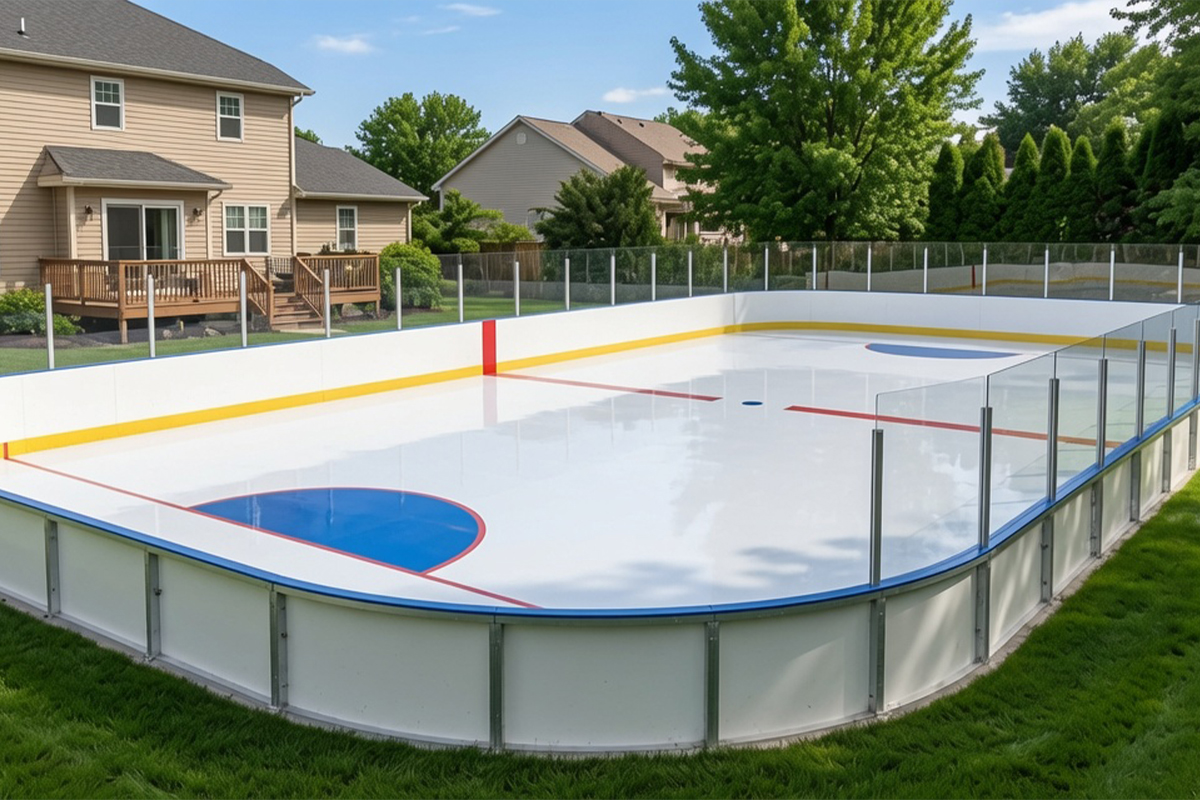
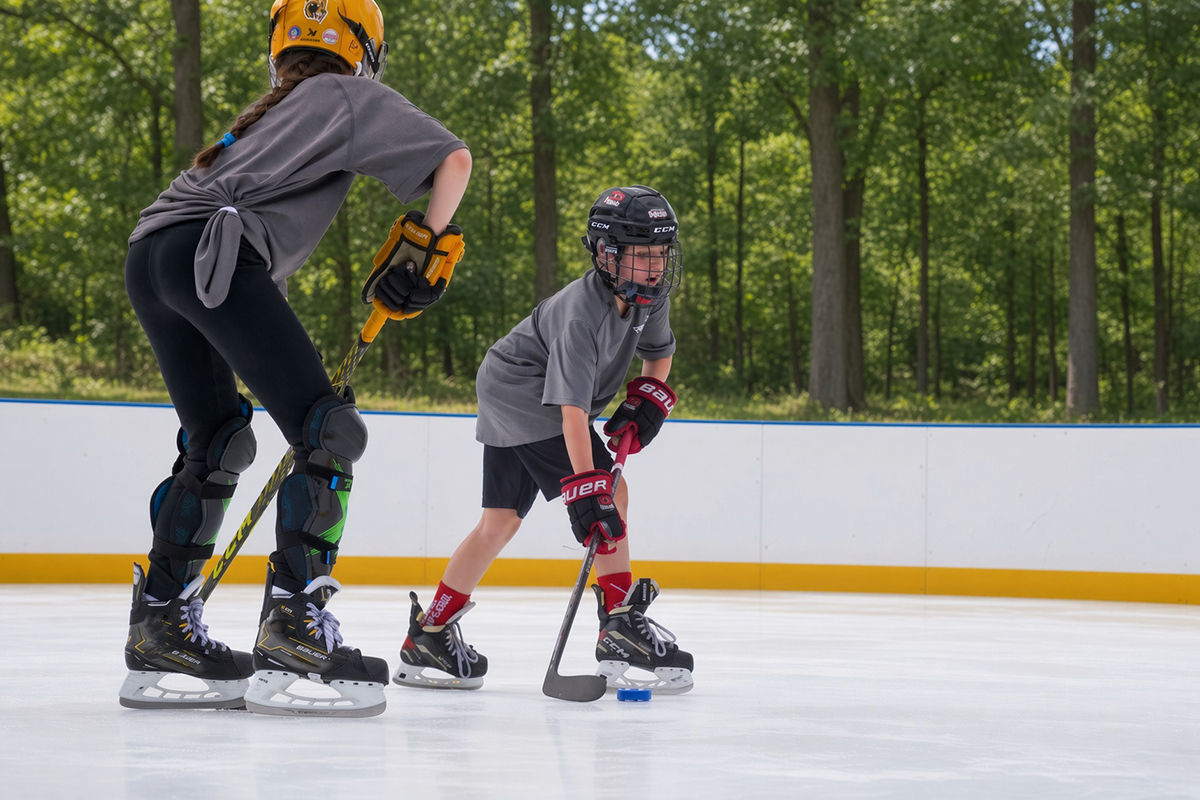
A backyard synthetic ice rink lets your family skate at home twelve months a year — no flooding, no freezing, no waiting for winter. Sizes from a shooting pad to a full-yard rink. The panels click together by hand, so most families install it themselves in an afternoon.
Same commercial-grade surface we install in schools and NHL-partnered community rinks. Just sized for your yard.
| No flooding | No 2am hose work, no re-flooding after every thaw |
|---|---|
| No refrigeration | No power, no water, no chiller, no running cost |
| No season | Works in July. Works at 40°C. Doesn't melt |
| No Zamboni | Vacuum the shavings, wash it monthly. That's it |
Real backyard ice gives you the weeks the weather decides to give you. This gives you every week.
Three sizes most families choose from — or cut to any shape that fits your yard.
Shooting pad
Shooting, stickhandling and puck work. Fits a patio or a section of driveway.
Skills rink · Most popular
Edge work, crossovers and proper skating for one or two players at a time.
Included
Panels, connection hardware and an install guide.
Add-ons
Boards and containment · nets · line markings and creases · weather tarp · maintenance kit · lighting
Lead time: 8–12 weeks from order · Custom shapes and sizes available
Three steps. No tools, no adhesive, nothing fixed to the ground.
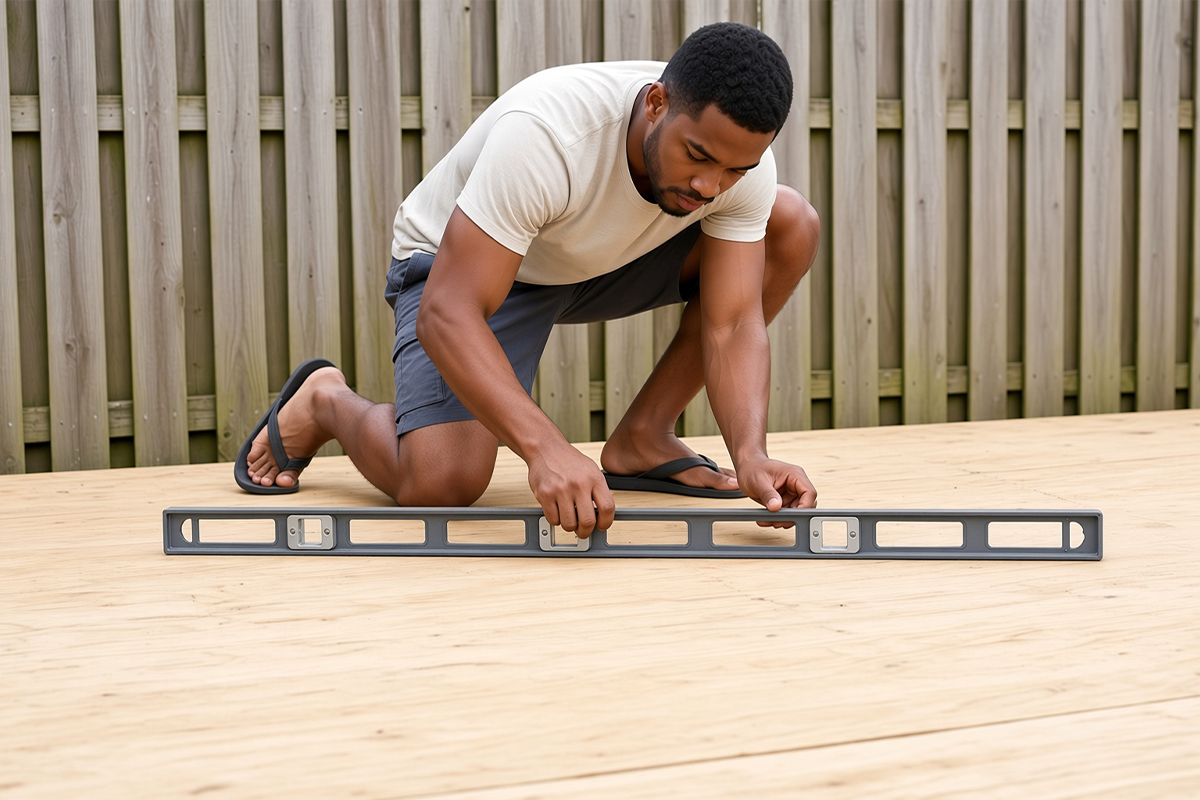
Concrete, asphalt or pavers are ideal — lay the panels straight down. Grass or uneven ground needs levelling first. Send us photos and we’ll tell you which you’ve got.
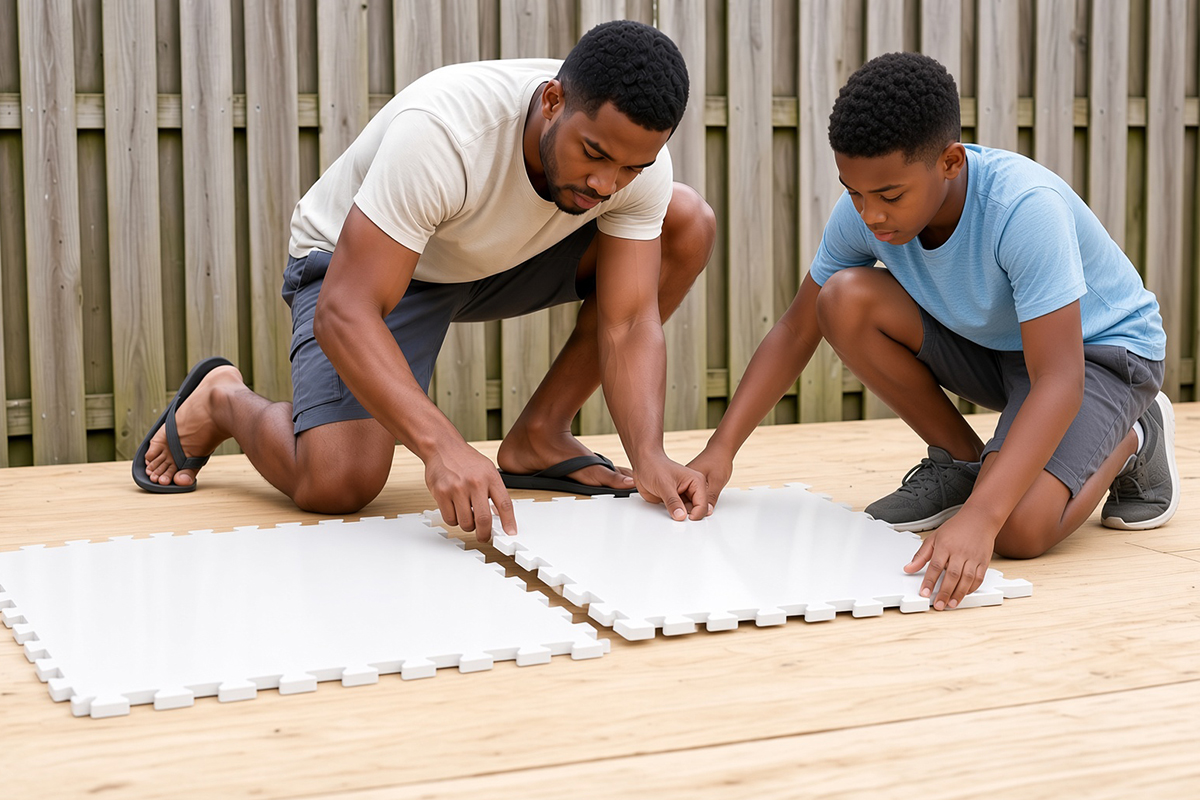
They interlock by hand. Two people, one afternoon, a typical backyard rink.
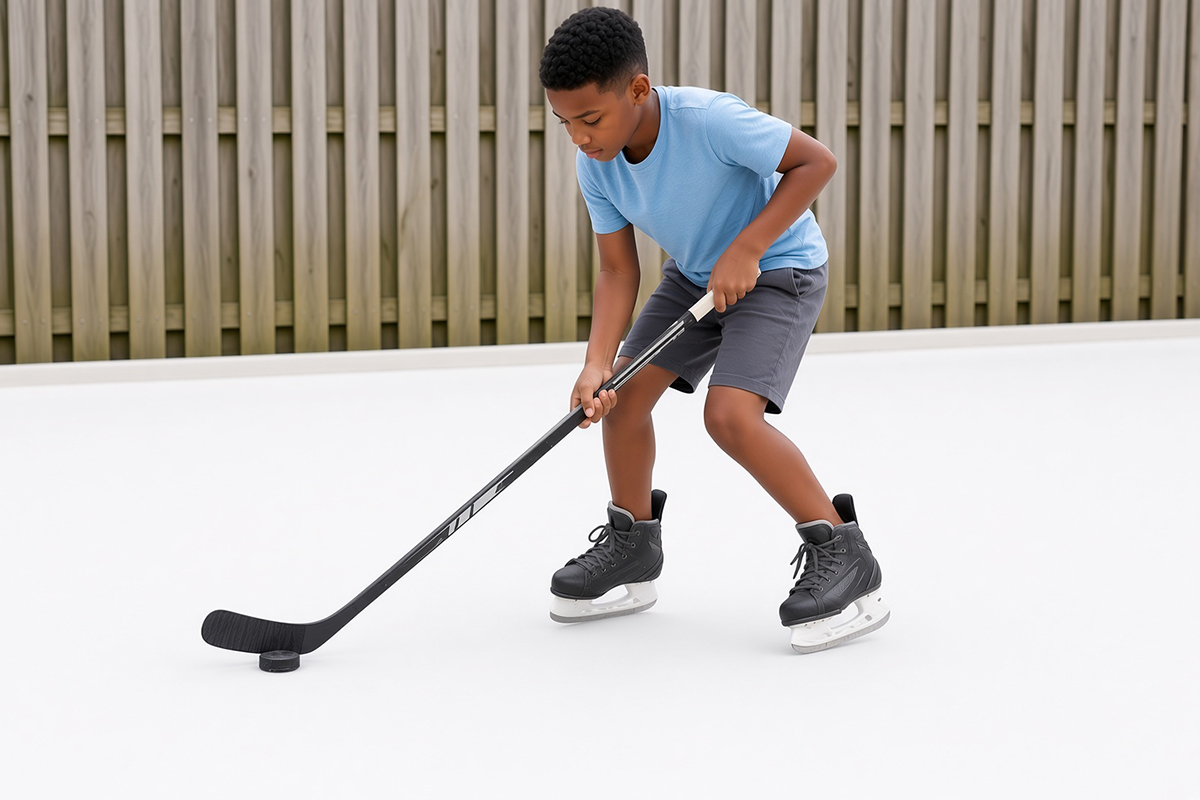
That’s it. No curing, no flooding, no waiting.
Want us to do it? We install anywhere we service from our Montreal and Fort Lauderdale depots.
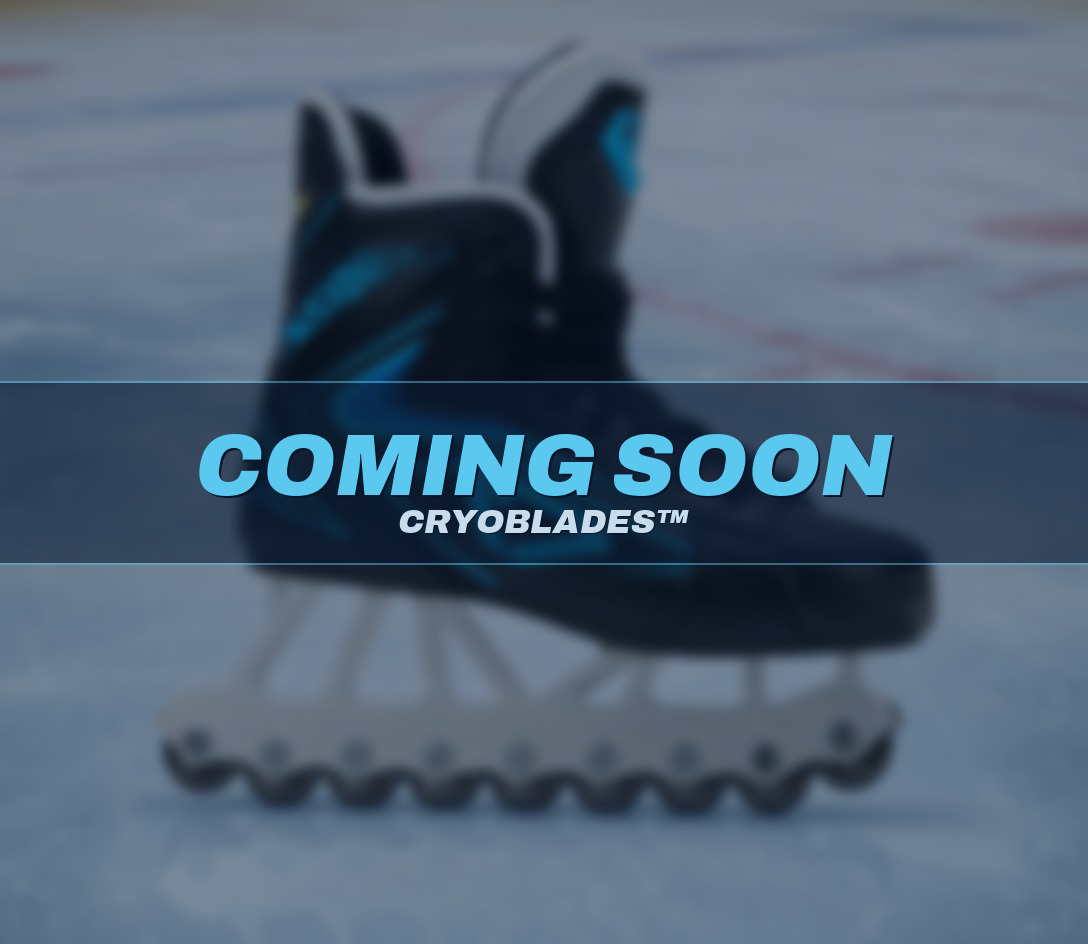
CryoBlades™
Here’s what nobody selling backyard rinks will tell you: most synthetic ice doesn’t feel much like ice, and it chews through skate edges. Both complaints are real. Both have the same cause.
A steel blade glides on real ice because pressure melts a microscopic film of water beneath it. The blade is sliding on water, not ice. Polymer doesn’t produce that film — so the blade ploughs instead of gliding, and the surface grinds down the edge.
Every manufacturer has attacked this from the panel side: denser polymers, better glide agents, tighter seams. It took synthetic ice a long way, then stopped. No panel can make a steel blade behave the way it does on water.
We built the other half.
CryoBlades™ is the first blade system designed for polymer from the ground up rather than adapted from steel — engineered alongside our panels as one system. Nobody has done this before.
Your regular skates work fine on our surface. CryoBlades is what makes it feel like the real thing.
Launching January 2027
Straight answer: because they’re not the same product.
Most backyard synthetic ice sold online is injection-moulded tile — a hollow honeycomb underside, one skateable side, lower-grade resin. It flexes underfoot, which is the sluggish feeling people describe on cheap synthetic ice. When the surface wears, it’s done.
Ours are solid, dual-sided, sinter-pressed commercial panels — the grade we install in schools and municipal rinks.
| Injection-moulded tile | Ice Sheets panel | |
|---|---|---|
| Skateable sides | One | Two |
| Construction | Hollow honeycomb | Solid |
| Flex underfoot | Yes — increases drag | None |
| Lifespan | One face | 10–15 years per face |
| Effective service life | — | 20–30 years |
Two faces at 10–15 years each means you flip the panels when the first side wears and get a second full lifespan. Cost per year of use is less than half a single-sided surface — before you compare purchase prices. The full breakdown of panel types →
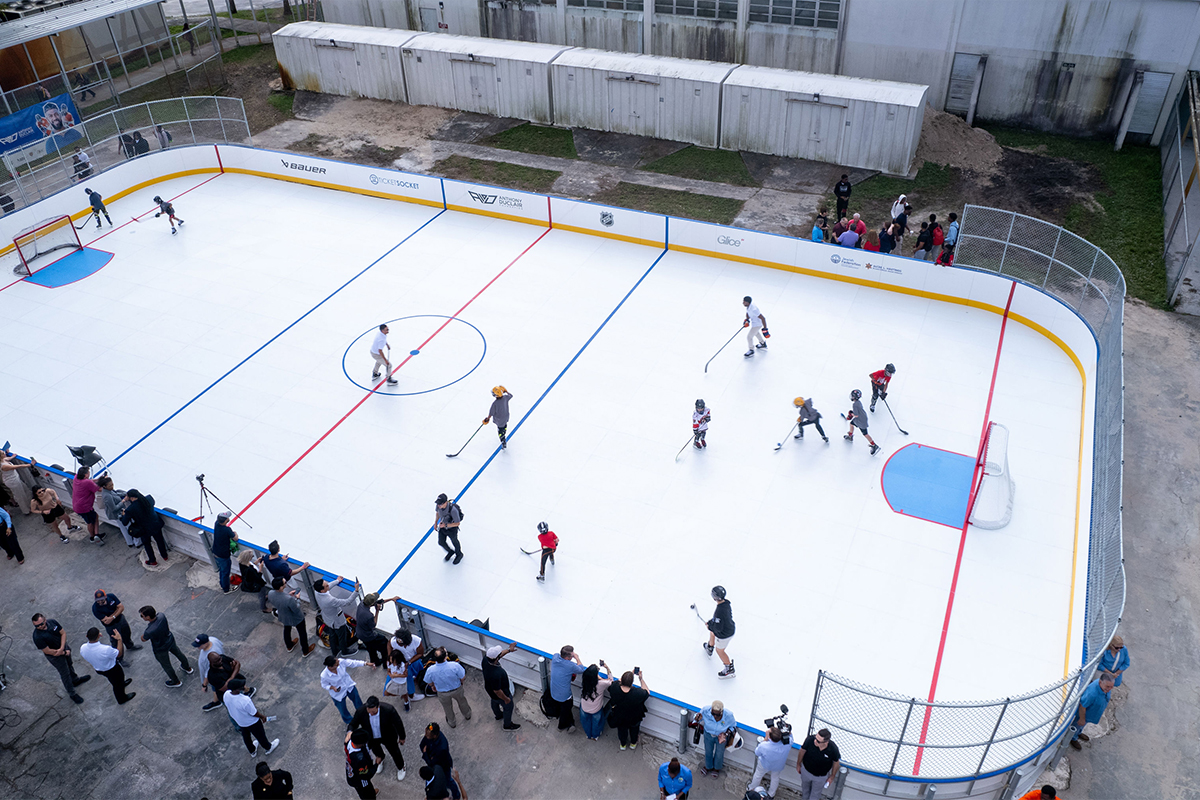
We built Florida’s first public synthetic ice rink at Boyd Anderson High School, in partnership with the NHL, the NHLPA Industry Growth Fund and the Anthony Duclair Foundation.
“Without Ice Sheets, none of this would have been possible. From conceptualization to permits and execution, they did it all — and did a fantastic job.”
Anthony Duclair, NHL Player
The panels in your backyard are the same ones.
Most yards work. The only thing that matters is how flat your surface is.
| Your surface | What's involved |
|---|---|
| Concrete patio or slab | Ideal — lay the panels, skate |
| Asphalt driveway or pad | Usually fine if level and in good repair |
| Interlocking pavers | Works if flat and stable |
| Compacted gravel | Needs screeding and a level base layer |
| Grass or soil | Needs excavation, base material and compaction |
| Sloped ground | Needs levelling first |
Panels sit on your surface — they don’t correct it. An uneven base creates gaps between panels, and gaps are what make a rink feel like plastic instead of ice.
How to check: run a string line or straight edge across the area in a few directions and look for dips.
Not sure? Send us photos and dimensions and we’ll tell you. Free, no obligation.
No water, no electricity, no resurfacing, no rebuilding it every winter.
If you’re somewhere reliably cold and happy with six weeks a season, flooding is cheaper and real ice is real ice.
But you get the weeks the weather gives you, you re-flood after every thaw, and in an unpredictable winter that can be very few. A synthetic rink costs more up front and then works in October, in April, and in July.
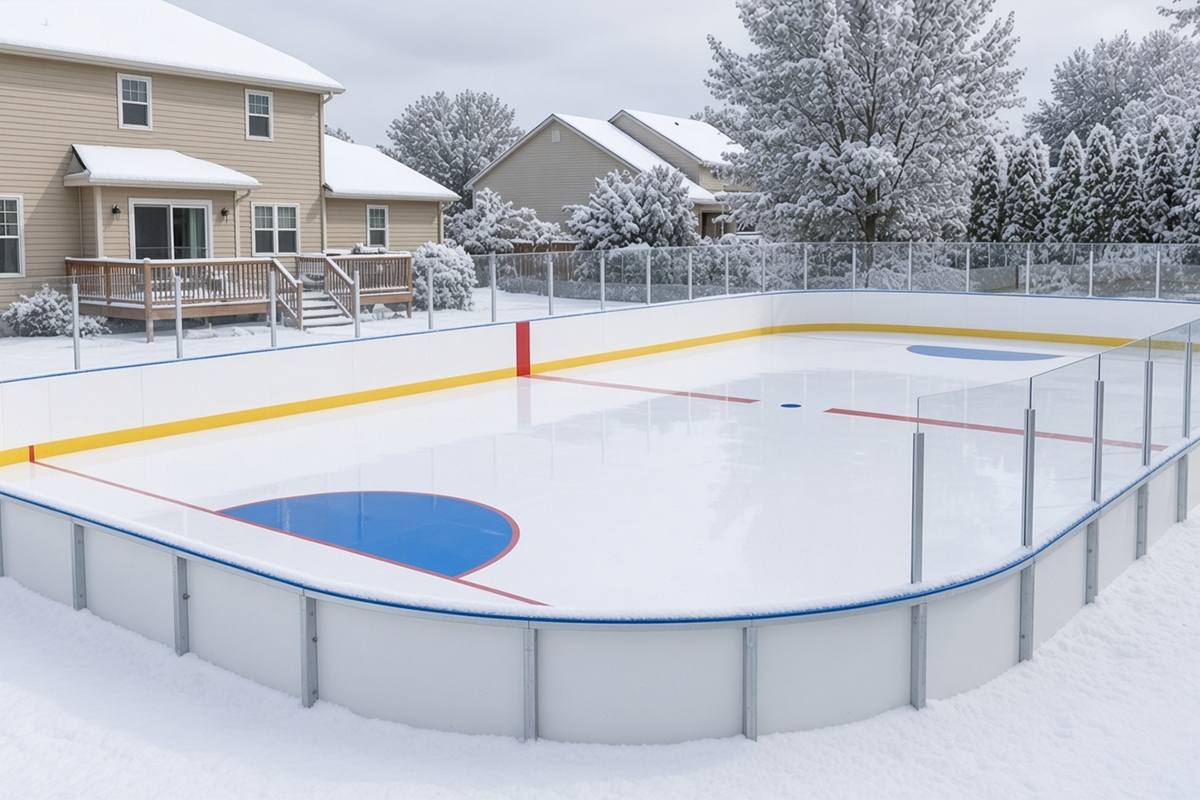
And in a cold climate you don’t have to choose. When winter arrives you can flood straight over the top of the synthetic panels and skate on real ice for as long as the freeze holds. When it thaws, the ice melts away and your synthetic surface is still there underneath — no rebuilding, no lost season.
Real ice in January, synthetic ice the rest of the year, on the same rink.
Most of it doesn’t, and that’s a blade problem more than a panel problem — steel blades are built to glide on the water film they melt, which polymer doesn’t produce. Our panels are the commercial grade, and paired with CryoBlades™ they were engineered as a matched system. It’s the closest we’ve skated to the real thing.
It depends on the size and whether you add boards, nets or lighting. Send us your dimensions and we’ll come back with a real figure — see the sizes above.
Panels interlock by hand — no tools, no adhesive. Two people, an afternoon. The work is in the base: your surface needs to be flat.
Not directly. Grass needs excavation, base material and compaction first. Concrete, asphalt or pavers are far easier.
No. Nothing is drilled, glued or fixed down — the panels simply rest on the surface and interlock with each other, so the rink can be lifted at any time and the surface underneath is untouched. Sweep the area before you lay panels so grit isn’t trapped, and if the rink will sit in one place for years, lift it occasionally to let the surface dry out.
Yes — and plenty of families do. Because every panel interlocks with the next, you can start with a shooting pad and expand it into a full rink whenever budget or space allows. The panels you already own stay in use; you’re only buying the additional area. Tell us your long-term plan and we’ll lay out the first phase so it grows cleanly.
Most synthetic ice dulls blades faster than people expect, because a steel edge is fighting a surface it wasn’t designed for. Our panels shed less than lower-grade surfaces, and CryoBlades™ solves it at the blade instead of working around it.
Yes — and in a cold climate it’s one of the best reasons to own one. Flood straight over the panels when the freeze arrives and skate on real ice all winter. When it thaws, the ice melts away and the synthetic surface is still there underneath, ready to use. Real ice in January, synthetic the rest of the year, same rink.
Yes. Performance doesn’t change with temperature and it doesn’t melt.
10–15 years per side. Dual-sided, so 20–30 years of service.
We ship across Canada and the USA from our Montreal and Fort Lauderdale depots.
Yes, in our service areas. Most customers do it themselves.
Photos and rough dimensions. We’ll tell you what fits, what it costs, and whether your surface needs work first.