
Schools & Municipalities
A traditional single-sheet arena starts at $8–10 million and carries energy, water and staffing costs forever. A synthetic rink delivers year-round community skating for a fraction of that — no refrigeration, no water, no certified operators, no seasonal shutdown.
We don’t sell you panels and wish you luck. We handle consulting, permitting, construction, programming and operator training, and we help you fund it.
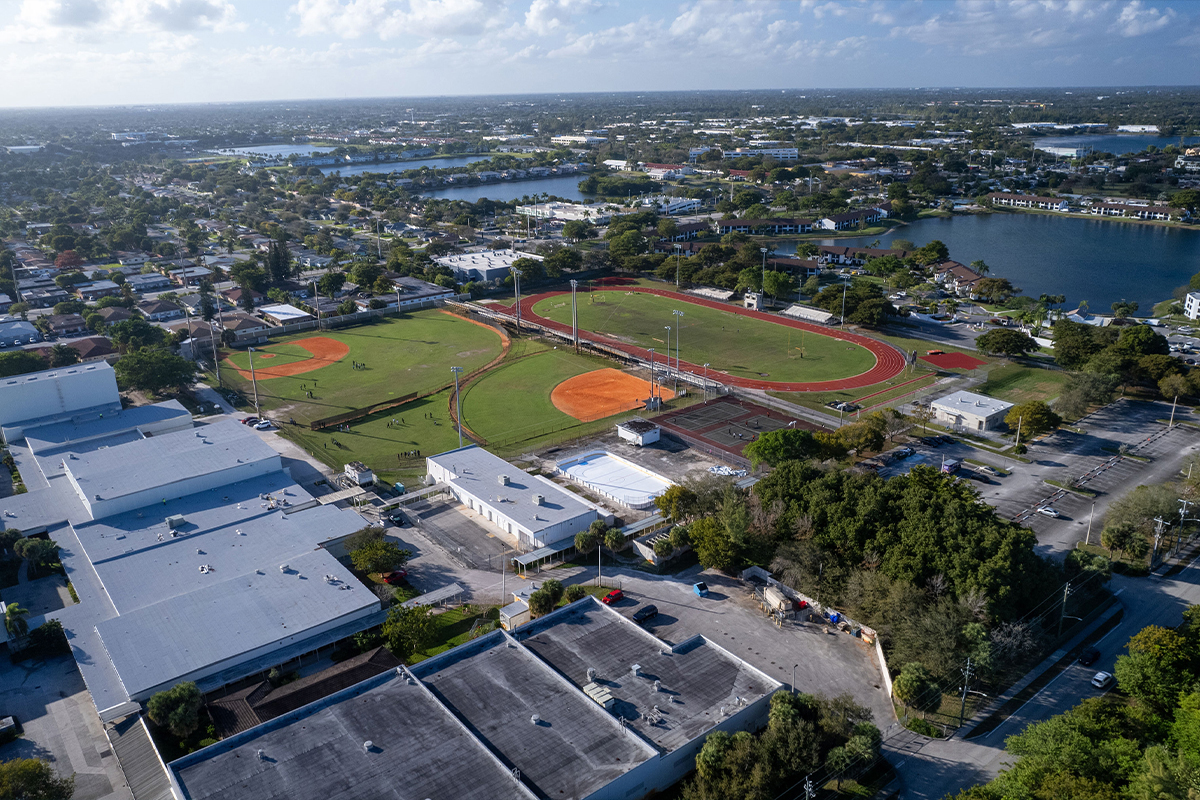
That’s how a high school in South Florida ended up with a year-round hockey rink, in partnership with the NHL, the NHLPA Industry Growth Fund and the Anthony Duclair Foundation.
Delivered in partnership with
“Without Ice Sheets, none of this would have been possible. From conceptualization to permits and execution, they did it all — and did a fantastic job.”
“Ice Sheets made our vision a reality, inspiring kids and growing the game.”
GAP
They’re choosing between a synthetic rink and nothing.
Municipal recreation budgets across North America are being squeezed at exactly the moment communities are asking for more access — and a refrigerated rink at $8–10 million is simply not on most tables.
A synthetic rink changes what’s possible. It often sits below the threshold that triggers a capital campaign or a referendum, which means it can be a line item rather than a multi-year project.
Not a pallet of panels.
| Capital cost | A fraction of a refrigerated build |
|---|---|
| Refrigeration | None |
| Water | Zero |
| Certified operators | Not required |
| Ice resurfacer | Not required |
| Operating season | Twelve months, any climate |
| Lead time | 8–12 weeks materials, then days to install |
| Lifespan | 10–15 years per face, dual-sided — 20–30 years of service |
Sizes run from a small community pad to a full 100′ × 50′ surface.
This is the difference between us and a panel supplier. A rink nobody knows how to program is an expensive slab — most of what we do happens before and after the panels arrive.
01 —
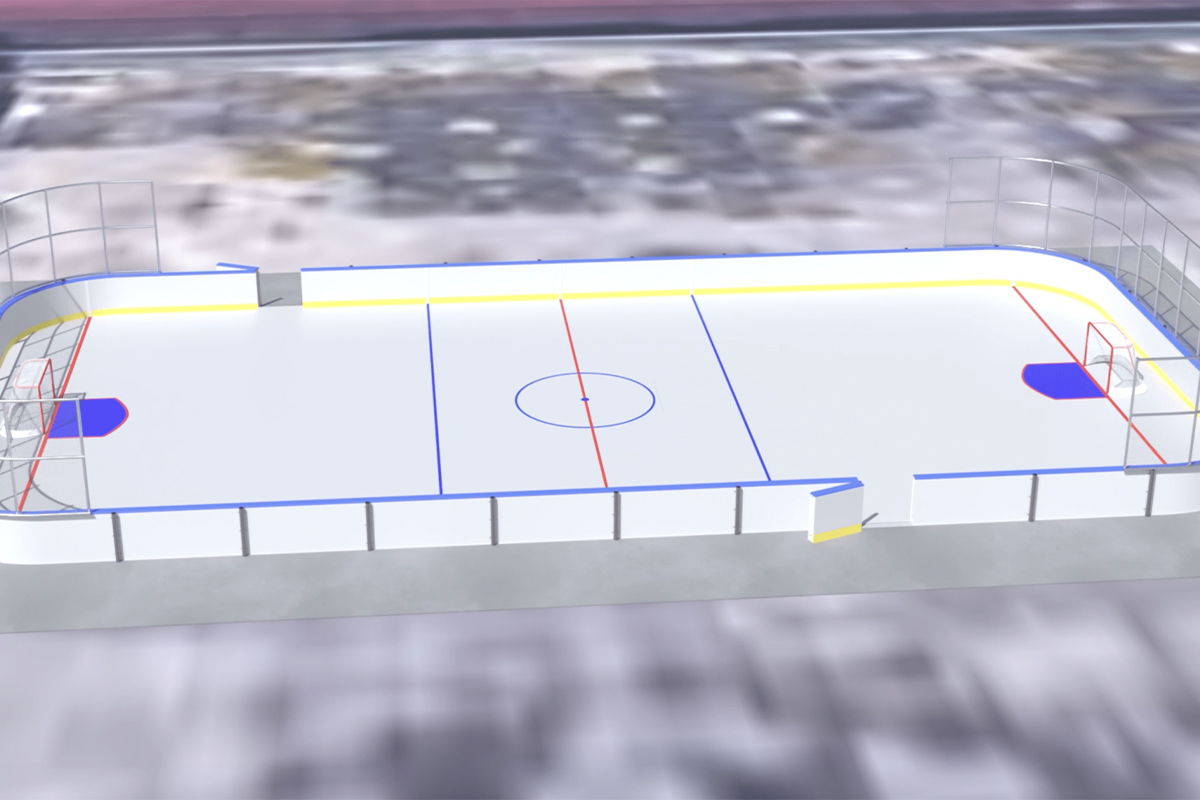
Site sourcing, project renderings for council and community presentations, permit requirements, and a rink design matched to your space, surface and budget.
02 —
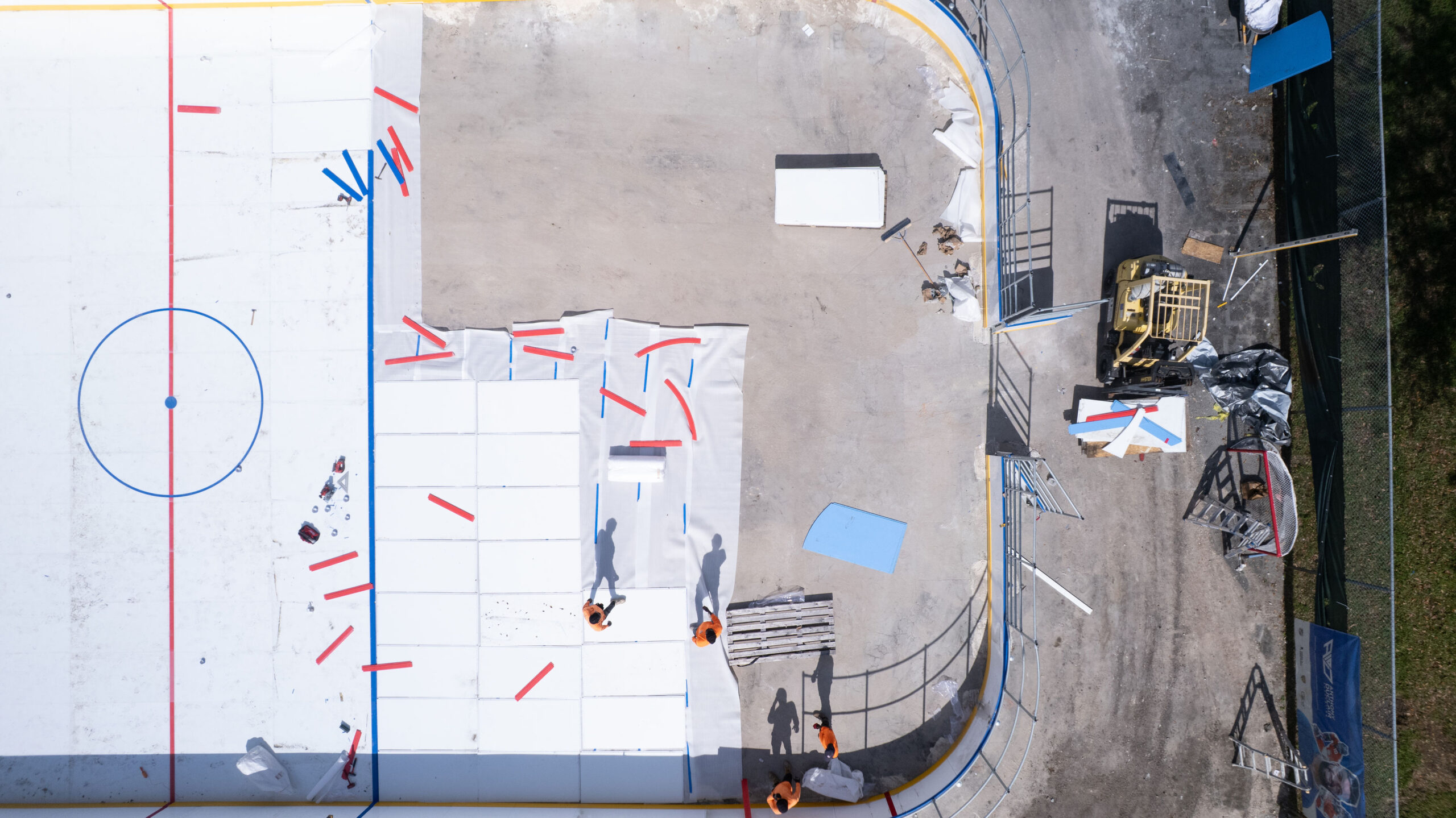
All vendors and suppliers managed from concept to completion — surface, boards, locker-room systems, lighting, nets, covers, banners and decals.
03 —
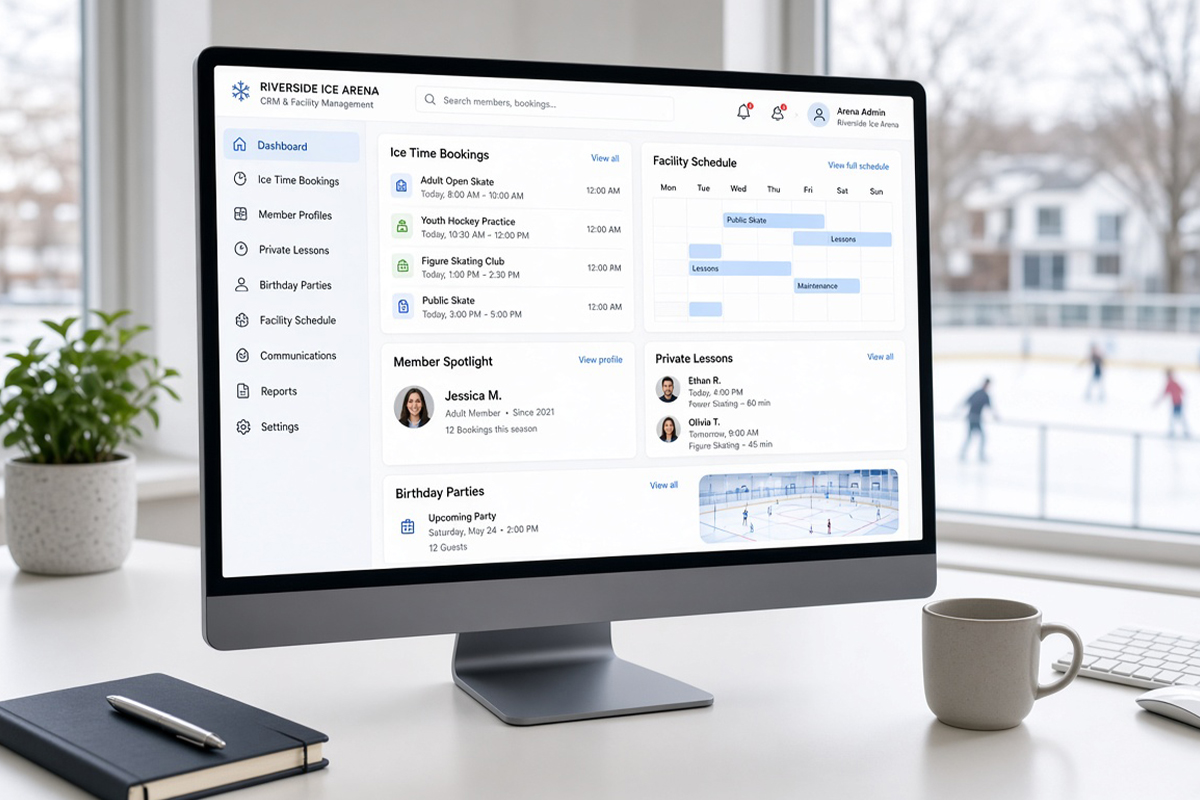
CRM and scheduling tools, rink and equipment management, risk and security solutions.
04 —
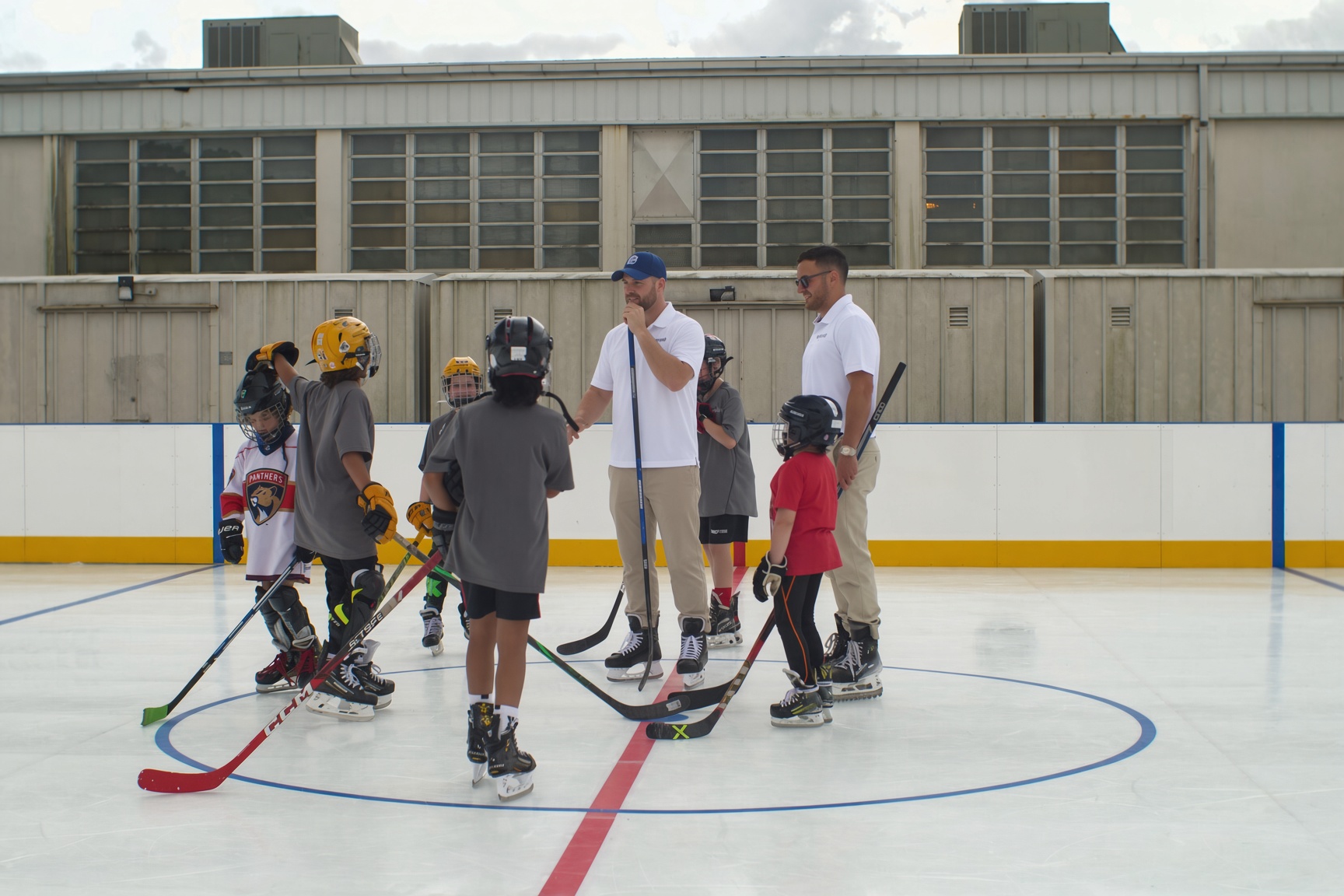
Hiring territory managers and coaches, building skill-development programs for new and experienced skaters.
05 —
Customer and player data, demographic analysis, campaigns that drive utilisation.
06 —
Press, media and promotional support for your groundbreaking and ribbon-cutting.
Plus funding support throughout — grant mapping, sponsorship structuring and financing options. See the funding guide →
For facilities wanting more than a surface, we build the full environment — a Hockey Gym (strength and conditioning designed around hockey), a Shooting & Stickhandling Simulator with instant feedback, and a Skatemill for continuous high-speed skating in a fixed footprint.
Each is billable independently of ice time, which matters if your rink needs to contribute to its own operating cost. More on the training environment →
Most are. The question is how much preparation.
| Your surface | What’s involved |
|---|---|
| Existing tennis or basketball court | Ideal. Little to no preparation |
| Concrete pad or paved lot | Usually straightforward |
| Compacted gravel | Needs screeding and a level base |
| Grass or soil | Needs excavation, base material, compaction |
| Sloped ground | Needs levelling first |
What matters: flatness above all — an uneven base produces panel gaps regardless of panel quality — plus drainage and delivery access. Sun exposure doesn’t affect performance; the surface doesn’t melt.
Indoor or outdoor both work. Outdoor is more common for schools because it doesn’t consume building space.
Many synthetic rink projects fall under the dollar figure that triggers formal competitive tendering — a quote and a purchase order rather than a months-long RFP. Check your threshold before assuming you need a full process. This alone can save a season.
Above threshold, expect a published solicitation, question period, sealed proposals and evaluation against stated criteria. We respond to these regularly and can help you scope the specification.
Some agencies can buy through existing cooperative contracts, eliminating the need to run a process at all.
Minimum panel thickness
Published tenders frequently specify 20 mm. Set it based on expected traffic — too thin and panels flex, over-specified and you narrow the field for no performance gain.
Qualification language
Requirements like “supplying synthetic rinks for several years with numerous clients” are common. Worth checking that yours produces a competitive field rather than one incumbent.
Requirements vary by jurisdiction, site and whether the installation is permanent or seasonal. Many installs on existing hard surfaces are straightforward; school board property, hurricane or seismic zones and publicly-owned land involve more process.
On complex projects we handle permitting and approvals as part of the engagement. We did it for Boyd Anderson — in Florida, on school board property, to hurricane code.
Most funded projects combine three or four sources rather than finding one.
| Source | Typically covers |
|---|---|
| Municipal or school capital budget | The largest share |
| Infrastructure grants | A meaningful portion, if you qualify |
| Sponsorship and naming rights | A share, for visibility |
| Community fundraising | A share, plus proof of demand |
| Hockey foundation grants | Equipment and programming, not construction |
| Financing | The remainder, spread over time |
One thing that catches most project committees: the major hockey foundations fund programs and equipment, not construction. Build the rink from infrastructure and community sources; fund the skates and programming from hockey sources.
We help map this, and we’ve done it — Boyd Anderson was funded through the NHL/NHLPA Industry Growth Fund, the Anthony Duclair Foundation, and an NHLPA Goals & Dreams equipment grant. The full funding guide →
08 — De-risk it
The strongest funding application isn’t a projection — it’s attendance data.
Our Ice Breaker™ mobile rink deploys for a day, a weekend or a month, fully crewed. For a council or school board that’s a low-risk way to test whether your community turns up before anyone commits capital. Several of our build conversations started as a rental.
Revenue potential: admission, skate rental, programming fees, facility rental, sponsorship. A rink that partially funds itself is a much easier approval.
| Task | Frequency | Who |
|---|---|---|
| Vacuum loose shavings | Every few days | Existing facilities staff |
| Power wash | Roughly monthly | Existing facilities staff |
| Inspect panels and boards | Periodically | Existing facilities staff |
| Replace worn panels | As needed, individually | As required |
| Flip panels | Once, at 10–15 years | Us |
No refrigeration plant. No certified operator. No resurfacer. No water. No electricity for the surface. Typically absorbed by existing grounds staff rather than requiring a hire.
A 100′ × 50′ outdoor synthetic rink in Lauderdale Lakes, Florida — the first public synthetic ice rink in the state — delivered in partnership with the NHL, the NHLPA Industry Growth Fund and the Anthony Duclair Foundation.
Far less than a refrigerated rink, and often within existing budget authority. Full cost breakdown →
Generally no. Maintenance is typically absorbed by existing facilities staff. Programming supervision depends on what you run.
8–12 weeks for materials, then days to install.
Yes — that’s where the advantage is largest. Florida’s first public synthetic rink runs year-round in South Florida heat.
Yes. Ball hockey, floor hockey and general recreation all work on the surface, which widens who can participate.
Individually replaceable, so worn zones are swapped alone. At end of first-face life, panels flip.
Yes — grant mapping, sponsorship structuring and financing options are part of what we do. Funding guide →
Yes. Rent the Ice Breaker™ and use the attendance data in your funding application.
Tell us what’s on the ground, what you want to program and what budget you’re working with. We’ll tell you what’s realistic.